Scent profileDesert sage, dry sweetgrass, warm earth
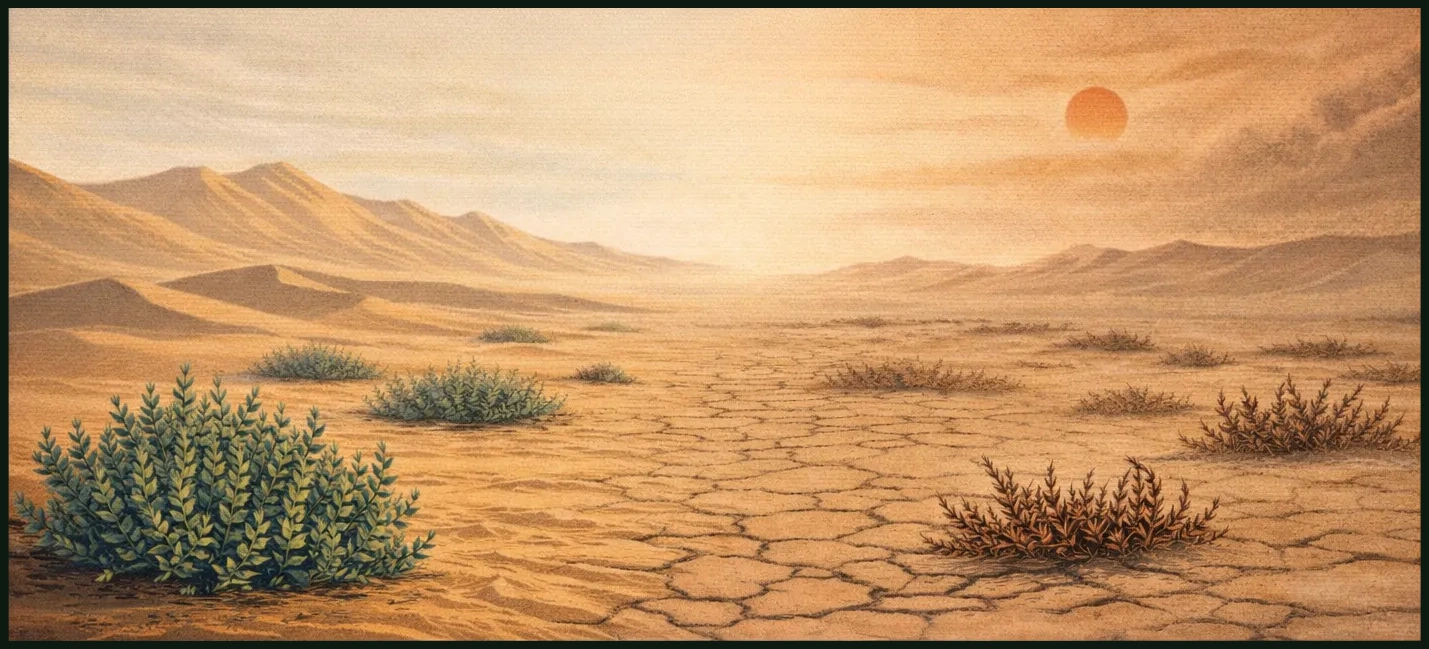
The sagebrush sea covers more of the American West than any other ecosystem: 175 million acres across eleven states, more land than France. Most people have driven through it on the way to somewhere else without even noticing.
In the 1800s, someone brought cheatgrass from Eurasia, accidentally mixed into crop seed and straw. Cheatgrass germinates fast, dries out early, and burns like tissue paper. Sagebrush burns too — 1.3 million acres a year never return — but takes a human lifetime or two to come back.
Cheatgrass returns the very next season. An invasive that nobody wanted, that smells like nothing, replacing something immediately recognizable: sharp, resinous, ancient.